Yes, a garage works for golf club storage if it stays dry and holds a temperature roughly between 10°C and 30°C. The one thing to check right now is moisture: if your garage floods, sweats with condensation, or swings from freezing to scorching, your grips and epoxy joints are at risk. Fix the dryness problem first, or move your clubs indoors until you do.
Once you know your garage is dry enough, the next decision is hardware. Not every golf equipment storage method suits every garage, and the right pick depends on how many bags you own, how often you play, and whether you're renting or own the place.
Wall-mounted bag docks are the most space-efficient option for a garage golf club rack. They lift bags entirely off the floor and free up the area underneath for bikes, bins, or a workbench. The catch is installation: a dock needs to hit a stud or use proper masonry anchors, because a loaded golf bag with a full set of irons and a driver can weigh 8 to 10 kilograms, and a botched mount will eventually rip out of plasterboard. Renter-friendly wall mounts exist and work well when drilling into a stud is possible, but they're not much use in a rental garage where wall access is restricted or off-limits entirely.
Freestanding stands and racks solve that problem. They're cheaper than built-in cabinetry, need no tools to set up, and you can shift them around or take them with you when you move. Most golfers who store multiple bags in a garage lean on vertical rack systems or freestanding metal organisers precisely because they reclaim floor space without needing wall work. The trade-off is footprint: a freestanding rack still occupies floor real estate a wall mount would save you.
Individual hooks earn their place for one specific job: drying gear after a wet round. A single hook near the garage door lets a soaked rain hood, glove, or towel dry out before it gets packed away and grows mildew in a closed bag pocket.
Enclosed cabinets or lockers cost more but deliver the best long-term protection, shielding clubs from dust, UV fading, and temperature swings in one sealed unit. They're worth the extra spend if your bag holds premium irons, a simulator setup lives in the garage, or you simply want gear that looks as good as it plays.
Raised shelving or a pallet base rounds out the list. Keeping bags 10 to 15 centimetres off bare concrete stops water seepage and pest problems that ground-level storage invites, especially in garages prone to minor flooding after heavy rain.
Aesthetics matter more than people admit. A cabinet or an over-bonnet unit keeps gear out of sight, while open racks put your equipment on display, for better or worse.
Before you buy anything, run through this list. It takes five minutes and saves you from buying hardware that doesn't fit your garage or your golf habit.
Renters face an extra layer: any solution should be non-permanent and reversible, since drilling into a garage wall in a rented unit or apartment complex usually needs approval you may not want to chase.
Pro Tip: Measure your tallest club, usually the driver, from grip to sole, before buying a rack or cabinet. Most drivers are just over a meter in length, and a storage unit rated for "standard bags" can still be too short for an oversized driver head to clear.
Getting your golf gear garage setup right takes about half an hour, most of which is drying and cleaning, not mounting hardware.
Following that sequence, clean, dry, ventilated, elevated, moisture controlled, removes almost every risk factor garage storage carries.
Temperature and humidity aren't background details, they're the two variables most likely to wreck a good set of irons. The recommended range for club storage sits around 10 to 30°C, because anything colder can make grips brittle and anything hotter accelerates epoxy breakdown at the hosel, the joint holding the club head onto the shaft.
Run through this check monthly, or immediately after any round played in rain:
Short-term garage storage, meaning overnight or a few days between rounds, is genuinely low risk once clubs are clean and dry. Long-term storage is a different case: if your set sits untouched for months over an off season, a climate-controlled interior space or a breathable cover indoors avoids the slow epoxy and grip damage a garage can cause across extreme seasons.
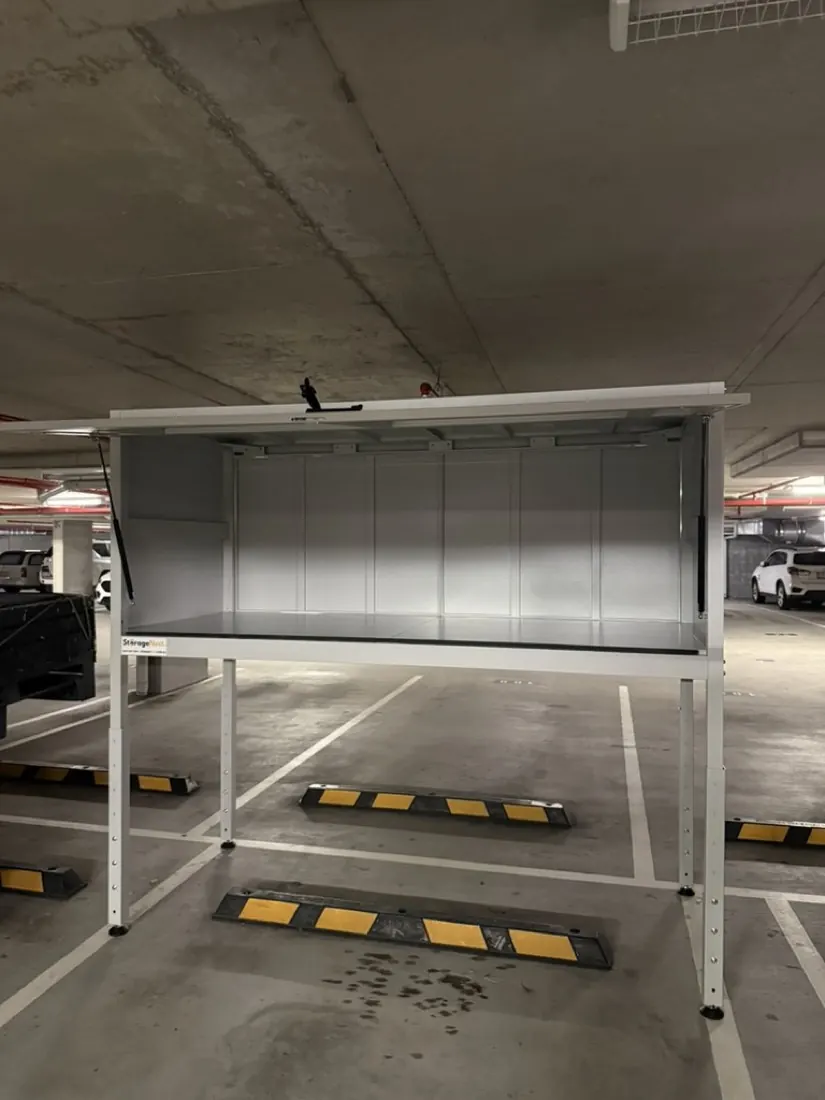
Not every garage has spare wall space or floor room for a rack. Apartment car parks and tight townhouse garages often leave zero clearance for a cabinet. Body corporate rules can also block wall mounting altogether. That's the exact gap Storagenest's Kookaburra was built to fill.
The Kookaburra mounts above your car bonnet instead of competing with it for floor or wall space, turning a section of your parking bay that normally goes to waste into a genuine storage locker.
For anyone storing clubs in a shared or space-limited garage, it's a genuine alternative to fighting for wall room.
Most advice on this topic treats "garage storage" as a single yes-or-no question, and that's the wrong frame. The honest answer is conditional: it depends on your climate, your garage's dryness, and how long the clubs sit untouched. A garage in a coastal Queensland climate behaves very differently to one that bakes through a 40°C summer or floods every wet season.
Where conventional advice falls short is assuming everyone has wall space to spare. Plenty of golfers live in apartments or townhouses with a single tight parking bay and no spare wall at all, and no rack or cabinet solves that problem because there's nowhere to put it.
My honest read: prioritise dryness and elevation before you spend a cent on hardware. A $30 rack in a damp garage still ruins grips. But if your real constraint is space, not moisture, look at solutions that use volume you're not using, like the area above your bonnet, rather than cramming another cabinet into a garage that's already full.
— Matt
If your golf bags are competing with the car for space, the Kookaburra gives you a secure, off-floor spot for them without sacrificing a single wall or your parking bay itself. Unlike a wall rack or freestanding cabinet, which both need spare floor or wall area you might not have, this unit uses the empty air above your bonnet, so your car and your gear stop fighting over the same square metres.
Checking whether it suits your space takes minutes. Storagenest runs a compatibility check against your bay dimensions before anything ships, then arranges professional installation in under two hours once you're confirmed. If you'd rather not commit to buying outright, renting is on the table too, with weekly plans starting from $25 through the rental option for apartment residents who want flexibility. For a full breakdown of the steel construction, load rating, and lock system, check the Kookaburra product page, or head to the Storagenest homepage to start your fit check today.