Six Options, Compared
1. Off-Site Self Storage
A rented unit at a storage facility. Plenty of space and available almost everywhere, but it is a recurring monthly cost with no end, and access means driving there during opening hours. Best for things you genuinely do not need — furniture between homes, an estate to sort through. Worst for camping gear you use every school holiday.
2. A Storage Cage In The Car Park
Many buildings offer caged storage next to the car bays. Convenient and on-site, but supply is limited, cages are often already allocated to specific lots, and mesh cages offer visibility rather than real security. If your building has a spare one available to buy or licence, it is worth asking about first.
3. Ceiling-Mounted Garage Racks
Platforms bolted into the ceiling of the car park or garage. They can work well in a private townhouse garage. In a strata car park they are usually a problem: they require drilling into common property, which needs body corporate approval, and they cannot be installed near fire services. Load ratings vary widely and installation quality matters enormously.
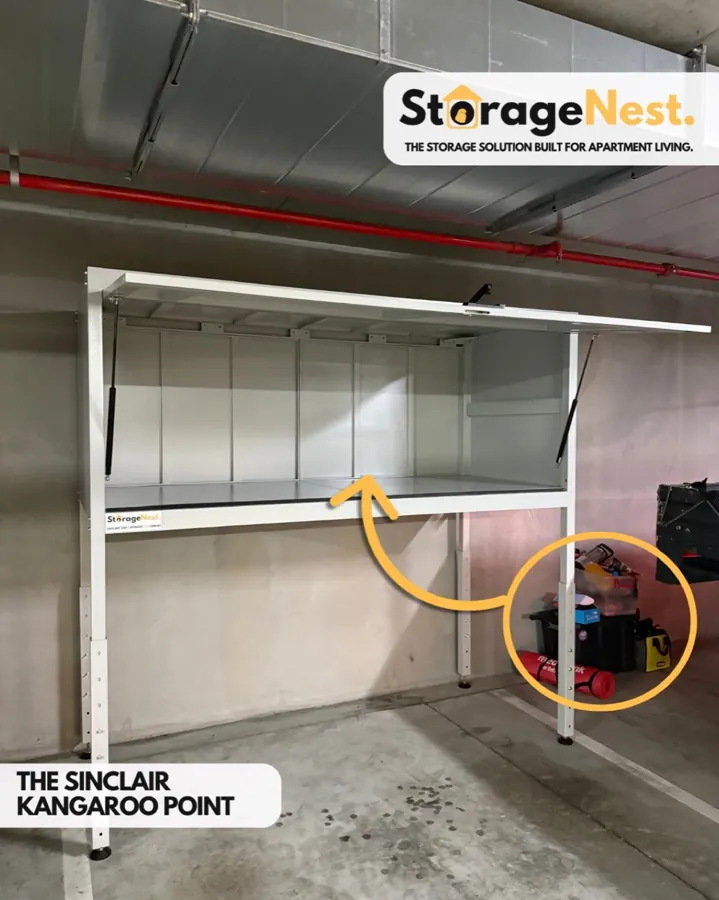
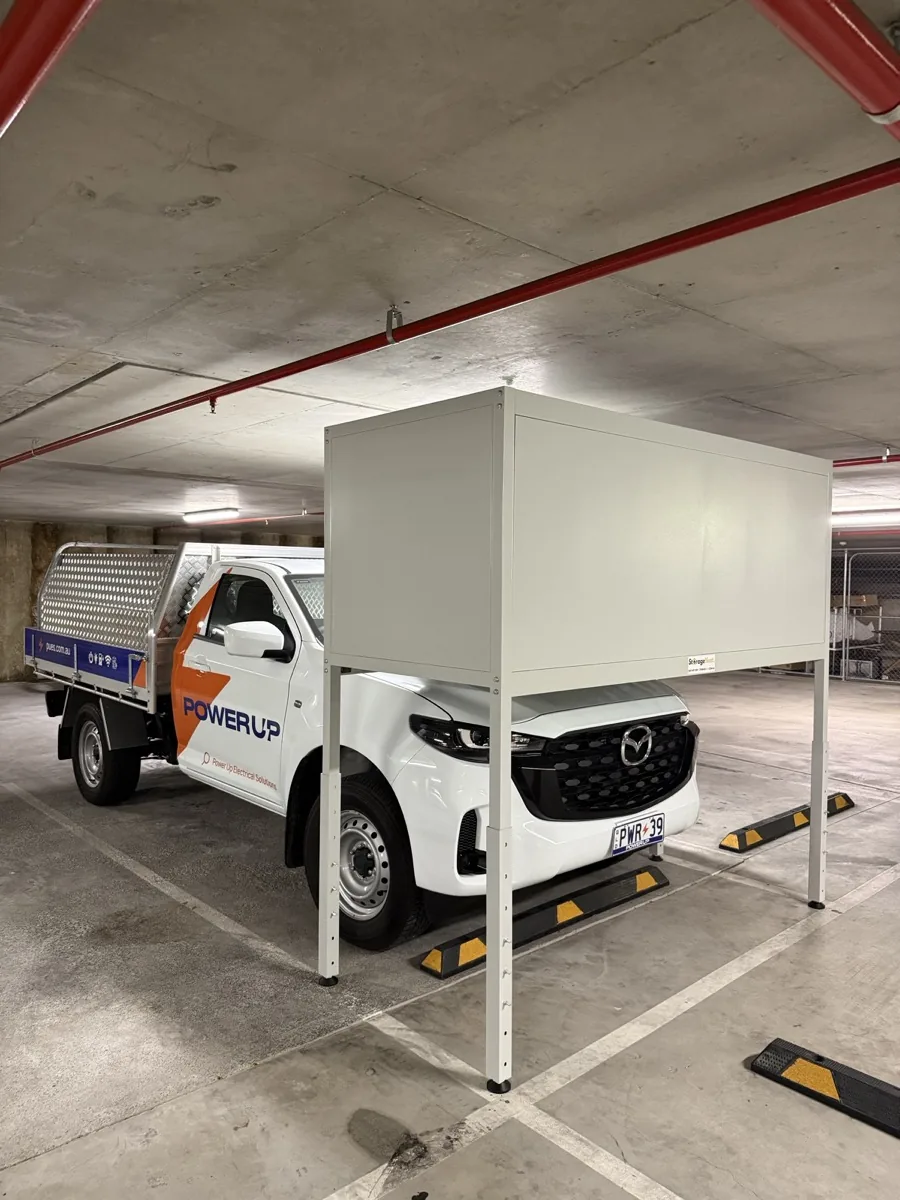
4. Over Bonnet Storage
A freestanding unit on adjustable legs that occupies the dead air above the front of your parked car. You keep the parking bay, nothing rests on the vehicle, and because it is freestanding there is no drilling into common property — which is what makes body corporate approval straightforward. The trade-off is that it is a fixed volume, and it needs adequate overhead clearance to work.
5. In-Apartment Storage Furniture
Ottomans with storage, bed bases with drawers, over-door racks. Genuinely useful and cheap, but the volumes are small and it consumes living space you already feel short of. Good for linen and shoes, not for a tent and four camp chairs.
6. Storing At A Family Member's House
Free, and therefore popular. It relies on someone else's goodwill and their spare space, access is awkward, and it tends to end when they move or downsize. Fine as a stopgap, poor as a system.