Over Bonnet Storage Installation Time

A professional install is done in under two hours. Here is what actually drives the timeline — and how to make sure yours is the quick version.

A professional over bonnet storage install is usually finished in under two hours, including delivery and final checks. Self-assembly is slower — generally one to four hours, depending on whether you have a second person helping and how much clearance your parking bay allows. The real swing comes down to access, unloading logistics, and how much adjustment the legs need.

The Short Version

  • Bay height and bonnet clearance matter more than anything else. The Kookaburra's legs adjust between 2.05m and 2.35m, which covers most residential bays — but a bay near the limit takes longer to set up.
  • Delivery logistics quietly eat the most time. Basement bays, narrow ramps and lift-only access can add hours if they are not flagged in advance.
  • Pre-measuring, sending clear photos, and lodging body corporate paperwork early prevent almost every avoidable delay.
  • Professional installation is consistent at under two hours from arrival. Solo self-assembly can pass four hours once you factor in reading instructions and correcting mistakes.
  • Checking the door, lock, leg stability and bonnet clearance on the day avoids a follow-up visit.

What Affects Installation Time?

Every install has a floor and a ceiling. The floor is a straightforward job with good access. The ceiling is what happens when access, clearance or approvals get complicated.

Bay height and bonnet clearance

This matters more than almost anything else. The Kookaburra's adjustable legs span 2.05m to 2.35m overall height, and it needs a minimum of 2.1m clearance to the lowest obstruction. Most standard sedans and SUVs fit without drama. If your bay sits near the bottom of that range, or your vehicle is taller than average, expect extra time fine-tuning leg height before the unit sits level. Our car park ceiling height guide covers how to measure this properly.

Delivery and unloading

This quietly eats the most time on the job. A ground-floor bay with a wide driveway is a five-minute unload. A basement car park three levels down, reached by a narrow ramp, is a different story. Flagging your access setup in advance saves real delays on the day.
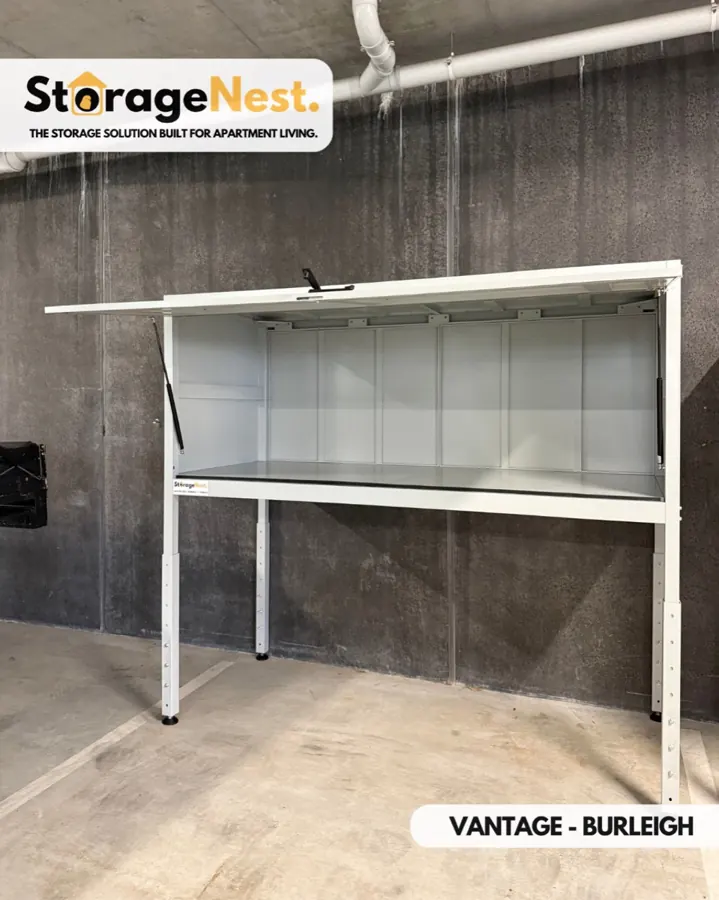
A Kookaburra storage unit installed and standing open in the basement car park of the Vantage building at Burleigh, with pipes running along the ceiling above
A completed basement install at Vantage, Burleigh. Access route, not assembly, is usually what decides the timeline.

Other things that stretch or shrink the clock

  • Sloped car park floors, which need extra adjustment on each leg to keep the unit level.
  • Body corporate approval delays. These do not affect on-site time, but they can push your install date back weeks if paperwork was not lodged early.
  • Whether the installer handles full site prep and cleanup, or leaves packaging for you.

Pro tip: Measure your bay height at its lowest point, not the average, and photograph it alongside your parked car. We can pre-check fit before anyone arrives, which avoids the single biggest cause of return visits.

What Happens During Installation

A typical professional install follows a predictable sequence. Knowing what happens at each stage helps you plan how long to block out.

  1. Pre-check and compatibility verification

    15–30 minutes. Final measurements, a visual check of bonnet clearance, and confirming any body corporate conditions are met before work starts.

  2. Delivery and unloading

    15 minutes to several hours. Straightforward ground-floor access takes minutes. Multi-storey buildings, narrow ramps and lift-only access stretch this out considerably if not arranged ahead of time.

  3. Assembly and leg adjustment

    30–90 minutes. This is where most of the labour happens. Panels go together, legs are levelled, and the frame is squared off against the bay.

  4. Securing, lock setup and final fit checks

    10–20 minutes. The 3-point locking system is tested, keys are handed over, and the installer confirms the unit clears your bonnet with the car parked normally.

  5. Post-install tasks

    15–30 minutes. Photos for body corporate records, warranty registration, and a walkthrough of how to open and secure the unit.

Add it up and you get three realistic scenarios. Professional installation typically finishes in under two hours from arrival to sign-off. Assisted self-assembly, with two people and basic tools, generally runs one to three hours. Solo assembly, particularly for a first-timer without a second set of hands, can stretch past four hours once you factor in reading instructions and correcting mistakes.

How To Prepare Your Parking Bay

Most delays trace back to something that could have been sorted before the installer or the delivery truck ever showed up.

  • Measure your bay height at the lowest point, and note your vehicle's bonnet clearance with the car parked as usual.
  • Photograph the bay and vehicle from several angles, including a wide shot showing access routes and ramps.
  • Clear personal items from the bay, or arrange a temporary spot with a neighbour if the bay needs to stay empty.
  • Get body corporate approval in writing, and confirm whether there is a required notice period or a specific installation window.
  • Tell us about access restrictions — low ceilings, narrow ramps, lift-only access — so delivery can be planned correctly.
  • If you are assembling it yourself, line up a second person and have basic tools ready before delivery arrives.

None of this takes long individually, but skipping even one step is how a two-hour job turns into an afternoon.

Professional Install vs Self-Assembly

The honest comparison comes down to certainty. Professional installers know how long each step takes because they have done it repeatedly, which is why we complete most Kookaburra installs in under two hours including delivery and setup.

Self-assembly can match that time if you have a helper, a clear bay and no surprises. Without those, it often does not.

Professional

Under 2 hours. Fit and lock checks included, consistent timing, and the site left clean.

Assisted Self-Assembly

1–3 hours. Realistic with two people and basic tools on hand.

Solo

4+ hours. Higher risk of misaligned legs or clearance issues that need redoing.

Panel size and weight make two-person assembly the sensible default. If your bay has tricky access, or body corporate conditions attached, professional installation removes nearly all of the guesswork. Units shipped outside our South East Queensland install area are assembled on site by the customer.

What To Check Right After Installation

A few quick checks confirm the job is done properly and save you a callback later.

  • Test the door and gas struts to make sure it opens and closes smoothly.
  • Check the 3-point locking system engages fully, and confirm you have received all keys.
  • Verify the legs sit stable on the floor, especially if your bay slopes, and recheck bonnet clearance with the car parked.
  • Photograph the finished setup and keep it on file for warranty purposes.

Pro tip: Report anything that feels off within the first day. Most adjustment issues, like an uneven leg or a sticky lock, take 10 to 30 minutes to fix on a follow-up visit.

An Installer's View On What Actually Shortens The Job

Most delays trace back to something avoidable: a bay measurement taken from memory instead of a tape measure, or a delivery truck arriving to find the bay still full of bikes and storage tubs. Sending clear photos and exact measurements before the install date means we can flag a clearance issue in advance instead of discovering it on site.

Where access is complicated — basement bays, narrow ramps, tight lift access — professional installation is worth it. It is not that self-assembly is unreliable. It is that a crew doing this daily has already solved the problems you would be solving for the first time.

The bay measured from memory is the one that costs you a second visit.

— Matt, StorageNest

Get It Installed Without The Guesswork

The Kookaburra gives you 2.3m³ of secure storage above your bonnet, with fully enclosed steel panels, a 3-point locking system and a frame rated to 500kg — without losing an inch of your parking space. Adjustable legs mean it suits a wide range of bay heights, and we handle fit checks, delivery and installation.

If your building requires sign-off, we support you through the body corporate approval process so paperwork does not hold up your install date.

Free Compatibility Check View The Kookaburra

Made with BabyLoveGrowth’s AI tools